Friday, November 29, 2013

#7 Inspiration


Inspiration


Salvador Dalí was one of the most eccentric artists ever. He sported a spectacular handle bar mustache, beginning in the 1920’s, and is best known for his achievements in Surrealism Art. He used many methods to reflect his ideas, including paint, charcoal, film, and sculpture, all which were amusing and avant garde in their time.
In 1919, at the age of 14, Dalí’s dad held an exhibition in their own house for him. The next year he attended Academia de San Fernando for four years. Here he learned his technique and skills for all the other mixed medias he was going to use in the future. But, before the final exams were over, Dalí was expelled, for he had proclaimed that no teacher was competent enough to examine him. He left Spain, and went to Paris. There, he met Picasso, who had been his biggest influence up to then. To his surprise, Picasso had already heard of him through another artist, Joan Miró, and that he had spoke favorably of him. Besides Picasso, Dalí was influenced by Raphael, a Renaissance artist, Vermeer, a Dutch Baroque artist, and Velazquez, a Spanish Baroque artist. His work does not reflect their influence on him too much, but those were the artists he appreciated most.
In 1929, he met Luis Buñuel. Together, they made and produced a movie called Un Chien Andalou. It was 17 minutes long, and it incorporated all the Surrealists ideals. In it, ants come out of a watch, which later he painted in his painting, the Persistence of Memory. It is black and white, and in the beginning of the film, a boy on a bicycle is hit by a car, and ants start coming out from his hand. The film has no plot, and is suppose to make the viewer seem like they are dreaming. On the set of making this short film, he met Gala, a Russian immigrant whom he fell in love with. She was eleven years older than him, and she was married to a Surrealist poet at the time. His father disapproved of her and her connection with the Surrealists. Two years later, Dalí met Edward James, who became his new patron. He commissioned several works of art that resembled the Dada era. For instance, the Lobster Telephone. A person would talk into the lobster’s genitals, and listen through the head. Another piece was Mea West Lips Sofa. Dalí had a fascination with her lips, so he made them into a couch. The reason I chose salvador Dali for this assignment is because he was constantly being inspired by new artists, and that is how I am. I have such a hard time telling people who I am inspired by because it is constantly changing.
Salvador Dali
1931
Oil on Canvas


Salvador Dali (1943)
"Geopoliticus Child Watching the Birth of the New Man" 
Painting 


 1929
 oil on canvas
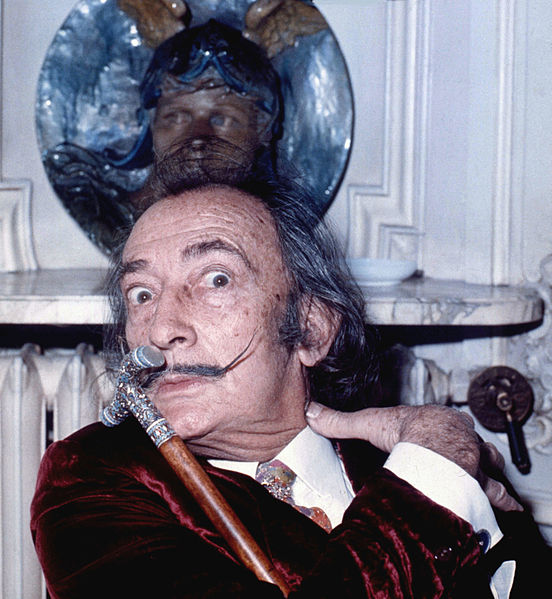


Salvador Dali
Self Portrait 
Photograph


#8 Georgia O’keefe & Kathe Kollwitz


Georgia O’keefe & Kathe Kollwitz
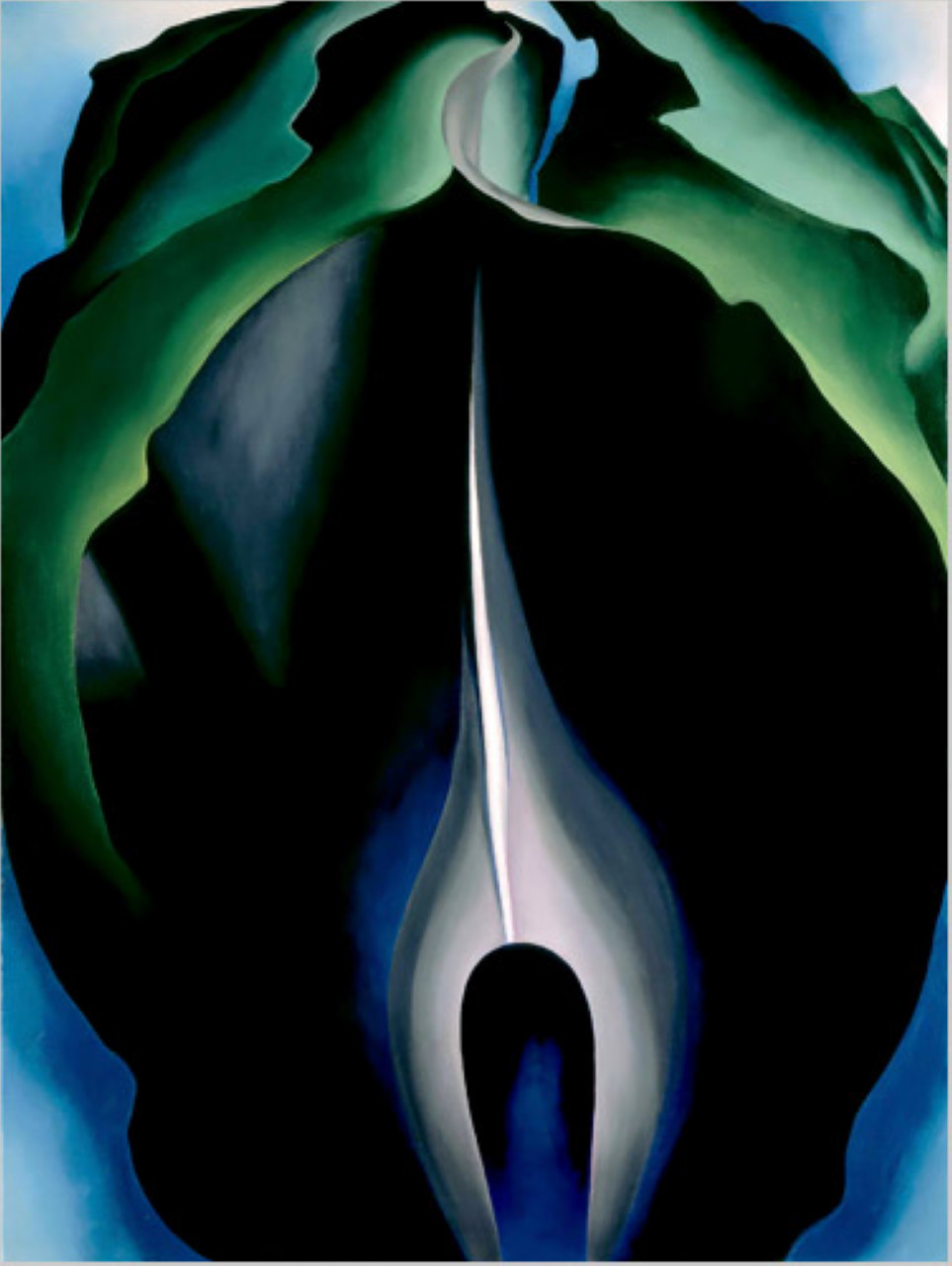
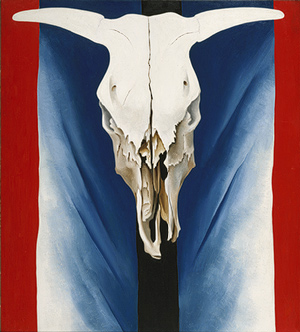
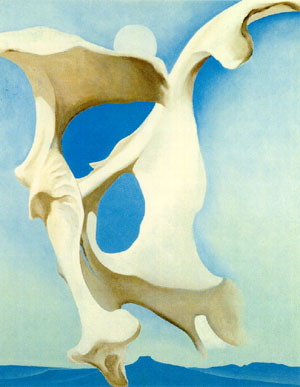
Georgia O’Keeffe was born in Sun Prairie, Wisconsin in 1867. The second of seven children, O’Keeffe longed to be an artist from an early age. In 1905 she attended the Art Institute of Chicago and a year later went to study at the Art Students League of New York. Though her student work was well received she found it unfulfilling, and for a short time abandoned the fine arts. She worked briefly as a commercial artist in Chicago before moving to Texas to teach. During the summer of 1915, O’Keeffe took classes at the Teachers College of Columbia University in South Carolina, and there began her re-entry into the world of painting. While in South Carolina she met Arthur Dow, a specialist in Oriental Art. Dow’s interest in non-European art helped O’Keeffe move away from the forms she had found so stifling in her previous studies. Soon after O’Keeffe’s return to Texas, she made a handful of charcoal drawings, which she sent to a friend in New York. That friend ended up getting her work shown at a gallery and in time persuaded O’keefe to move to New York. While there O’Keeffe painted some of her most famous work. During the 1920s, her large canvasses of lush overpowering flowers filled the still life's with dynamic energy and erotic tension, while her cityscapes were testaments to subtle beauty within the most industrial circumstances. In 1929 O’Keeffe took a vacation with her friend to Taos, New Mexico. The trip would forever alter the course of her life. In love with the open skies and sun-drenched landscape, O’Keeffe returned every summer to travel and to paint. When Steiglitz, her husband died in 1946, O’Keeffe took up permanent residence there. More than almost any of her other works, these early New Mexico landscapes and still lifes have come to represent her unique gifts. The rich texture of the clouds and sky were similar to her earlier, more sensuous representations of flowers. But beneath these clouds one found the bleached bones of animals long gone. Throughout the 1950s and 1960s, O’Keeffe’s fame continued to grow. In March of 1986, at the age of 98, O’Keeffe passed away at St. Vincent’s Hospital in Santa Fe, New Mexico. For many, her paintings represent the beginnings of a new American art free from the irony and cynicism of the late 20th century.


O'Keeffe, Georgia (1887-1986)


Jack-in-the-Pulpit 4


oil on canvas 


1930


flower of life II
1925


Cow's Skull: Red, White, and Blue, 1931


Georgia O'Keeffe 


Oil on canvas


Alfred Stieglitz Collection, 1952 


Georiga O'Keefe
Pelvis with Moon
Oil on Canvas
1943


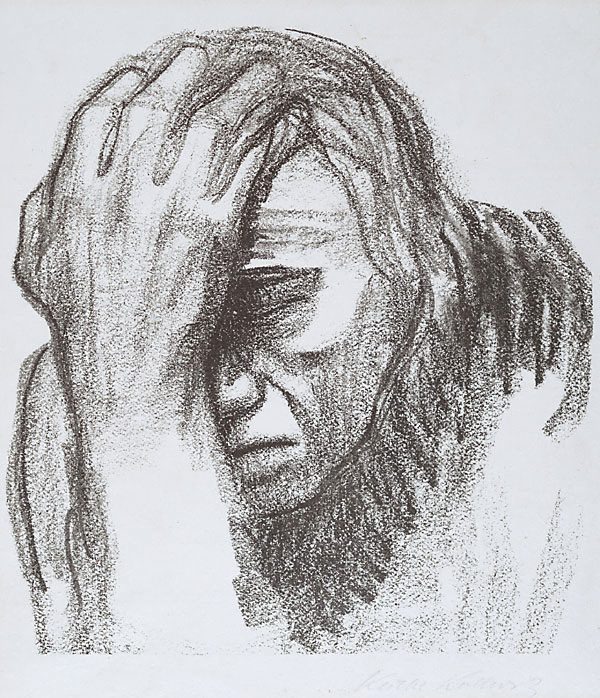
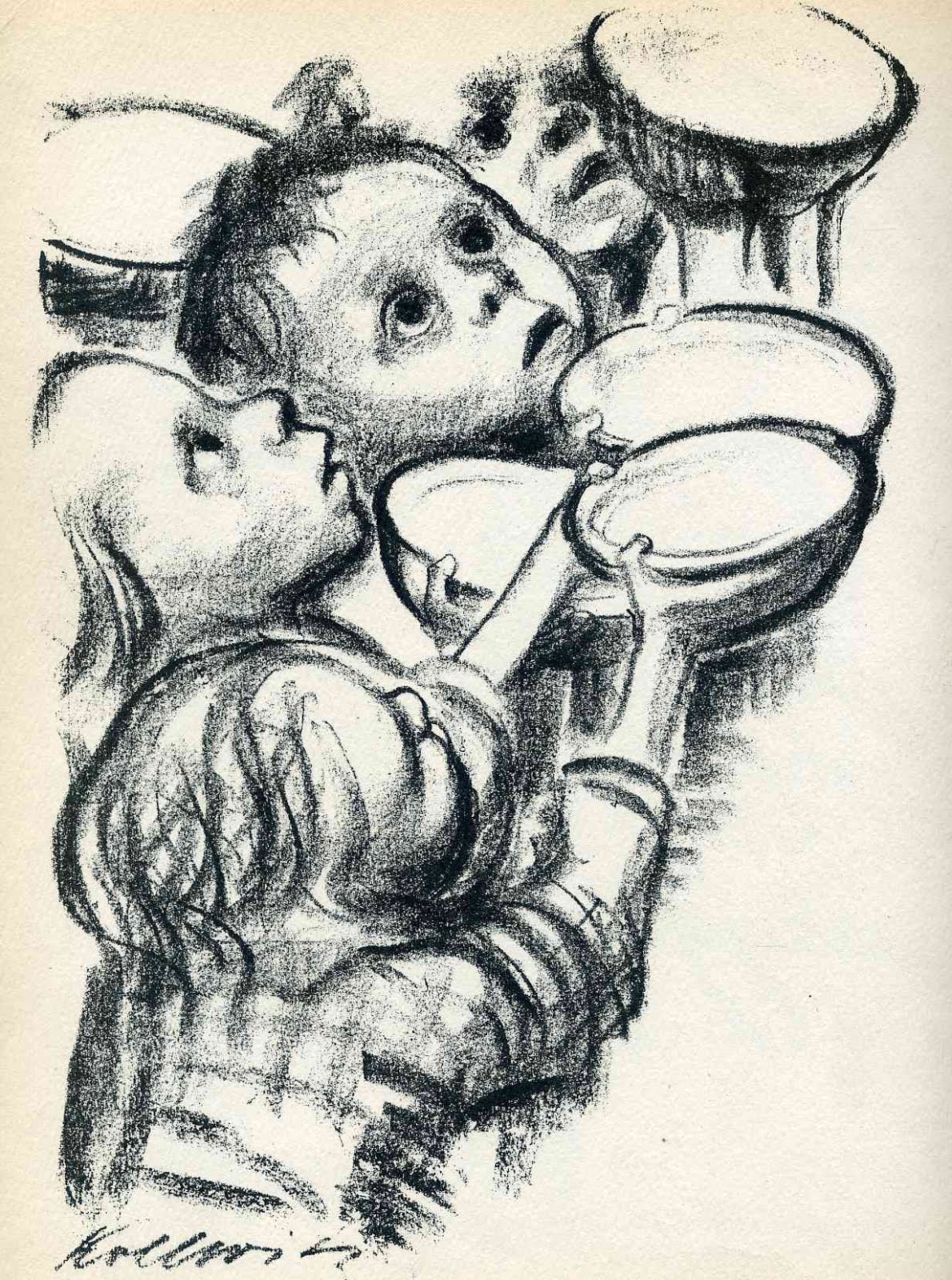
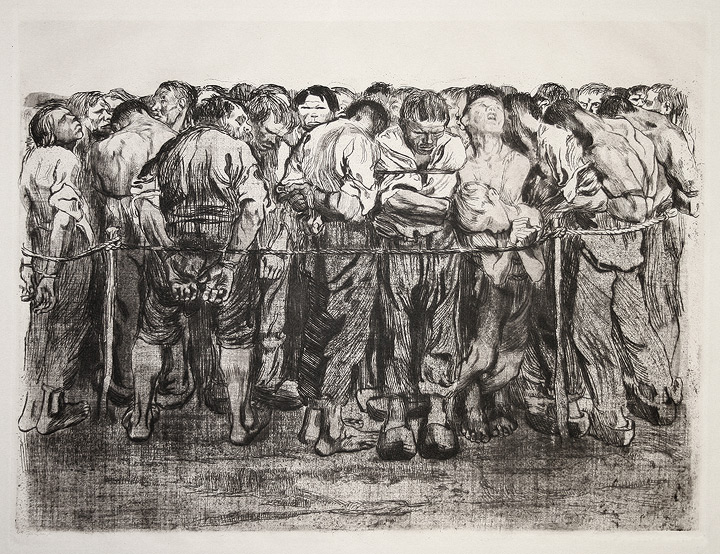
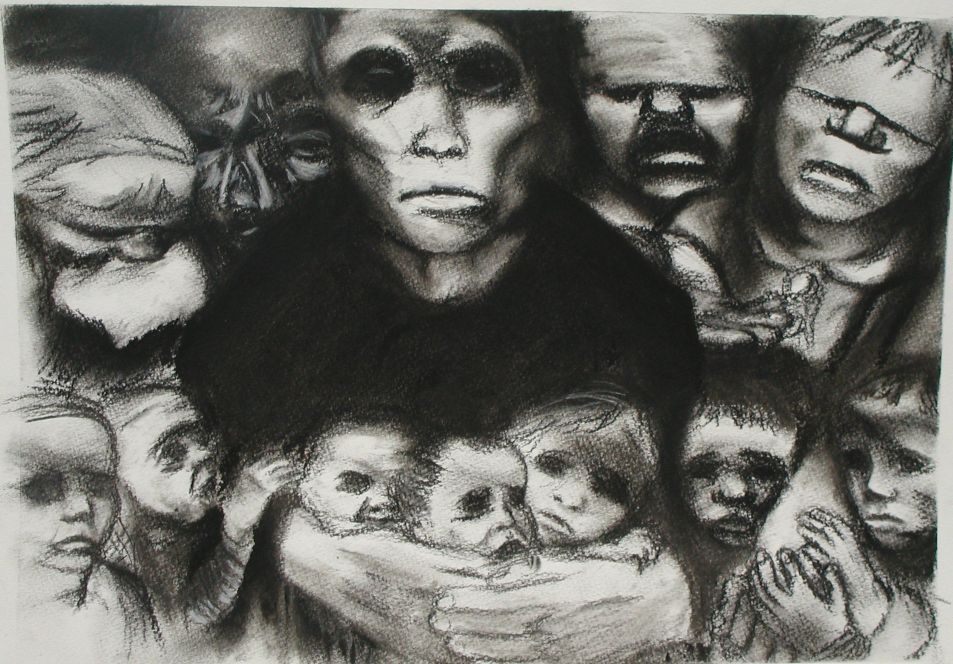
Kathe Kollwitz's imagery is marked by poverty stricken, sickly women who are barely able to care for or nourish their children. Kollwitz's art resounds with compassion as she makes appeals on behalf of the working poor, the suffering and the sick. Her work serves as an indictment of the social conditions in Germany during the late 19th and early 20th century. The daughter of a well to do mason, Kathe Schmidt was born in East Prussia. Her father encouraged her to draw and when she was 14 years old she began art lessons. She attended The Berlin School of Art in 1884 and later went to study in Munich. After her marriage to Dr. Karl Kollwitz, the couple settled in Berlin living in one of the poorest sections of the city. It was here that Kollwitz developed her strong social conscious which is so fiercely reflected in her work. Her art features dark, oppressive subject matter depicting the revolts and uprisings of contemporary relevance. Images of death, war and injustice dominate her work. She worked with a variety of media including sculpture, and lithography.It may be argued that her work was an expression of her own life experience. Her personal life was marred by hardship and heartache. She came into contact with some of the cities most needy people and was exposed to great suffering due to the nature of her husband's work. She lost her son to World War I and her grandson to World War II and these losses contributed to her works as well. Kathe Kollwitz became the first woman elected to the Prussian Academy but because of her beliefs, and her art, she was expelled from the academy in 1933. Harassed by the Nazi regime, Kollwitz's home was bombed in 1943. She was forbidden to exhibit, and her art was classified as "degenerate." Despite these events, Kollwitz remained in Berlin unlike artists such as Max Beckman and George Grosz who fled the country. She was proud of her work and stood up for what she believed to be right.
Artist : Käthe Kollwitz (Germany, b.1867, d.1945)
sketch on paper 
Date : 1920
 1924
Charcoal on Paper


 1908
The Prisoners 
Etching on paper


Käthe Kollwitz
 The Survivors
Charcoal on Paper 
 1923


Sunday, November 3, 2013

#5 Sculpture


Michelangelo & Auguste Rodin


Both Michelangelo and Auguste Rodin worked in marble for the pieces I am comparing but their purpose for doing the work were very different as well as the reactions to each piece. Michelangelo was commissioned to sculpt David by the church, whereas Auguste Rodin originally did this piece as “another one of his sculptures” but did end up getting paid for his work as it was put in exhibitions. The reaction to David was amazement, they changed the original placement of the sculpture because of its outstanding beauty, but with Rodin's “The kiss” the initial reaction was shock, and the public questioned if it was appropriate. These artworks are known as two of the best marble sculptures and yet they were done centuries apart.
In 1501, 25-year-old Michelangelo Buonarroti began working on his colossal masterpiece, the 17-foot-tall marble David. From a huge block of marble that had been abandoned decades earlier by another sculptor, Michelangelo took on the challenge of living up to Donatello and other precursors who had sculpted the same heroic figure. The David, portrayed in the Bible as a young shepherd who slew the giant Goliath and went on to become a valiant and just Hebrew king, was a fit symbol of courage and civic duty to guard the city of Florence.It was commissioned with the idea that it would stand in a niche on one of the cathedral’s tribunes, way up high. When Michelangelo was finished, they realized that it was far too beautiful to be placed up high, and so it was decided to build a base for the sculpture and to place it right in front of the main government building of Florence. The David is considered a masterpiece, an ideal male form combining heroic strength and human uncertainty. It was erected in 1504 in the public plaza of Florence, the Piazza della Signoria. In 1873, the original was moved to the Accademia delle Belle Arti, where it was better protected for posterity, and a copy of the work was erected in the plaza in 1882.
The Kiss was designed to be viewed from every angle and Rodin wanted the piece to be believable and real.In 1888, the French government ordered the first large-scale marble version of The Kiss from Rodin for the 1889 Exposition universelle, but it was publicly displayed for the first time in the Salon de la Société Nationale des Beaux-Arts in 1898. It was so popular that the company Barbedienne offered Rodin a contract to produce a limited number of smaller copies in bronze. In 1900 the statue was moved to the Musée du Luxembourg before being taken to its current location, the Musée Rodin, in 1918.Rodin chose to construct the lovers in the nude as he believed adding details such as clothing distracted the viewer from the raw emotion which they should feel when looking upon a sculpture.The way in which Rodin has entwined the lovers gives this sculpture movement and energy.Like many artists of his time, Rodin saw the creation of sculpture as the culmination of minds and relied heavily on the skill of his assistances. Running a large workshop, Rodin meticulously governed the creation of his sculptures, drawing on the experience he gained in commercial workshops during his youth.


Artist


Year
1882
Type
Marble


Artist
Year
1882
Type
bronze


Created: 1902


Artist
Year
1501–1504
Type


Artist
Year
1498–1499
Type
Marble

*
Artist: Michelangelo

Technique: fresco

Completion Date: 1510

#2 Rhythm, Scale, and Proportion


Rhythm, Scale, and Proportion


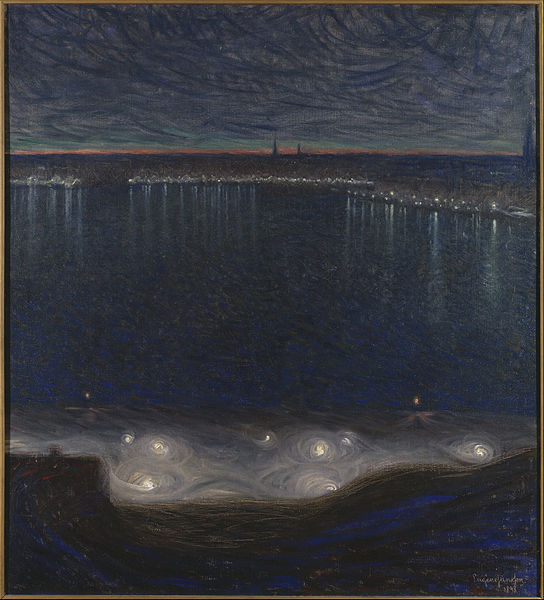
Rhythm is  based on repetition, much like a pattern the same elements are repeated  but with rhythm there are slight variations  in the pattern.  Like waves crashing on the beach, they continuously break on the shore creating lines that are repeated but each line is its own, its different from the one before. Rhythm can be portrayed through all visual arts. In Vincent Van Gogh's starry night  the rhythm is in the brush strokes he repeated to create the sky. Some artist chose to use rhythm in their paintings to create a type of emotion or feeling, in starry night  you get the sense of soft easy movement or sound , but in Kaiho Yusho’s fish nets drying in the  sun  the difference in lines gives you a sense of sharp and quick sound. Rhythm is most easily understood within music. Rhythm represents our desire for order, rhythm is like our own heartbeat , so naturally rhythm comes easy to us and helps connect us to a piece of art. Just as important as knowing the positives to using rhythm, scale and proportion are equally as important. Scale and proportion in art are both concerned with size. Scale refers to the size of an object in relationship to another object. All artwork has a physical size; when referring to an artwork's size, we use the term scale. The relative size of the artwork is always compared to the size of the human body; life-sized, miniature, enormous, are all terms that use the human body as a size reference. Without these elements, many artworks that have made a mark in the art world wouldn't be what they are today.


Vincent van Gogh The Starry Night Saint Rémy, June 1889.


Eugène Jansson Riddarfjärden, Stockholm, 1898


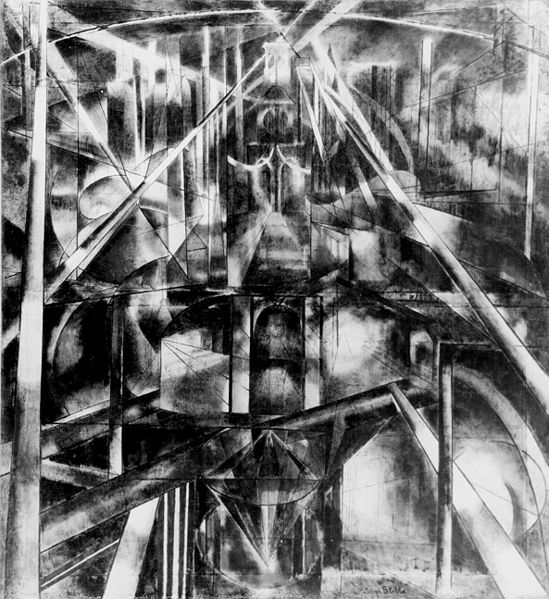
Joseph Stella, Brooklyn Bridge, c. 1917-1918


Works cited


1. Lamp, Lucy. "Design in Art." Sophia . BillNy, 00 000000 2013. Web. 23 Sep 2013. <http://www.sophia.org/tutorials/design-in-art-repetition-pattern-and-rhythm>.

2. Getlein, Mark. Living with Art. 9th edition. 1. New York, NY: McGraw Hill, 2010. Print.